
.png)
Digital event and trade fair communication: Making information visible exactly where visitors need it
Trade fairs, congresses, and events bring many people, program items, and rooms together for a limited time. Visitors want to know quickly where they need to go, when the next presentation starts, and which offers are relevant to them. At the same time, organizers must consistently display programs, changes, partners, and brands.
Printed signs, program booklets, and static maps can only partially fulfill these tasks. If a room changes, a program item is rescheduled, or a new notice arises at short notice, materials that have already been produced quickly become outdated.
This is exactly where digital event and trade fair communication comes in.
In a nutshell: Digital event and trade fair communication refers to the use of centrally controlled displays to welcome, inform, and guide visitors at trade fairs, congresses, and events in real time. Typical content includes programs, digital wayfinding, room occupancy, exhibitor information, sponsor content, and last-minute notices.
Digital signage thus supports the entire visitor journey – from the entrance through halls and conference rooms to exits, service points, and event areas.
Why traditional event communication reaches its limits
Events are dynamic. Content often needs to be prepared in a short time, displayed in many places, and changed immediately if necessary. Complexity increases, especially on large exhibition grounds or with parallel program items.
Typical challenges include:
- Visitors cannot immediately find entrances, halls, rooms, or exhibition stands.
- Program changes do not reach everyone in time.
- Printed plans and signs cannot be adjusted at short notice.
- Different events each require their own content and design.
- Staff repeatedly answer the same orientation questions.
- Sponsor and partner content must appear in defined areas.
- Occupancy of conference and meeting rooms changes.
- Content at multiple locations is updated inconsistently.
- After an event ends, many areas have to be manually reconfigured.
Digital displays don't solve every organizational task, but they do make information faster to update and much more visible at key touchpoints.
Why digital signage is particularly well-suited for trade fairs and events
Digital signage is a great fit for events because content can be prepared centrally while still being tailored to specific locations, times, and target audiences. A display at the entrance serves a different purpose than a screen outside a conference room or a large display in an exhibition hall.
The most important areas of application are:
- Arrival: Welcome screens greet visitors and display key information about the current event.
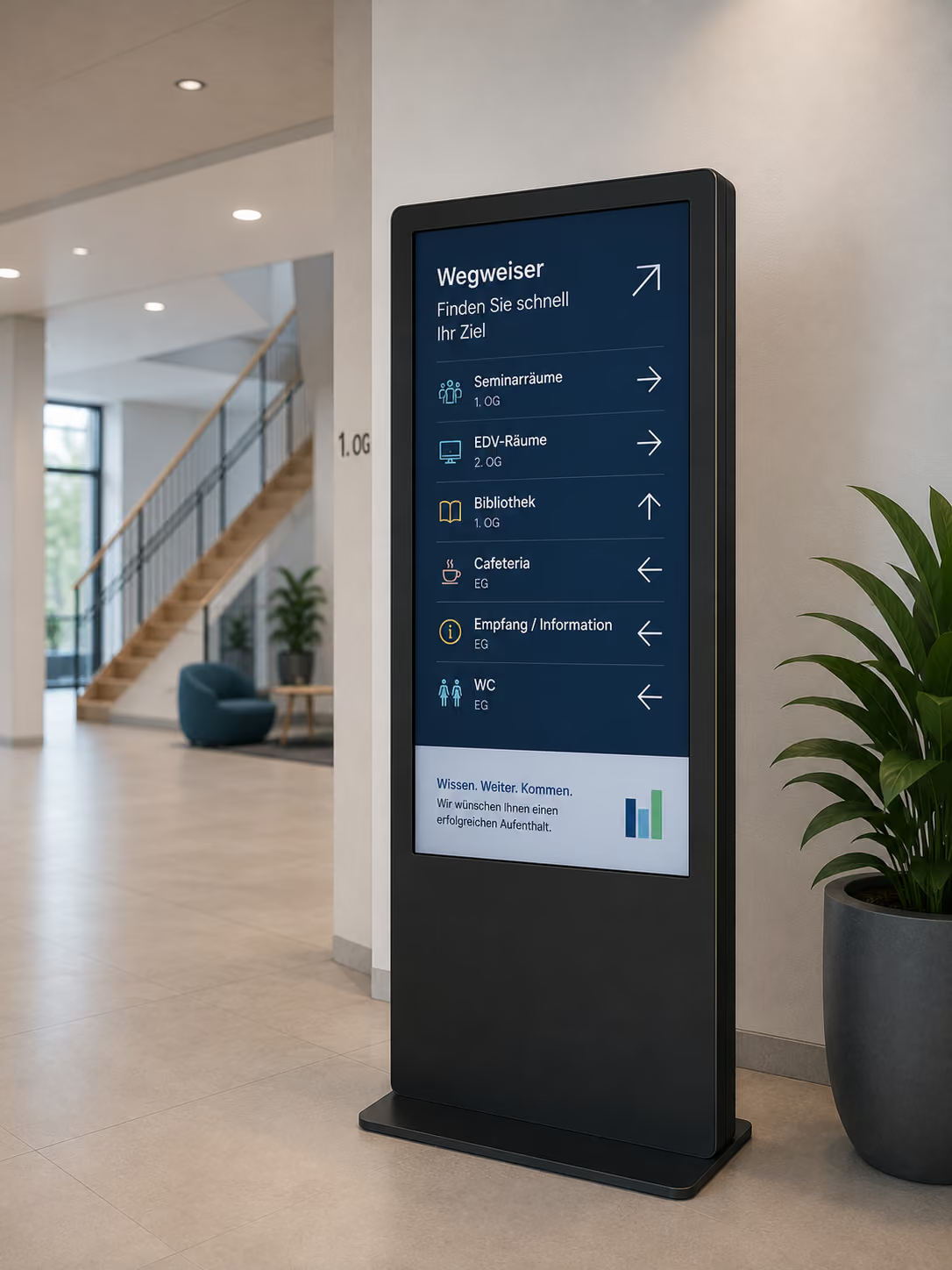
- Orientation: Digital wayfinding guides people to halls, rooms, exhibitors, stages, and service points.
- Information: Program overviews and info displays make schedules, topics, and updates easy to see.
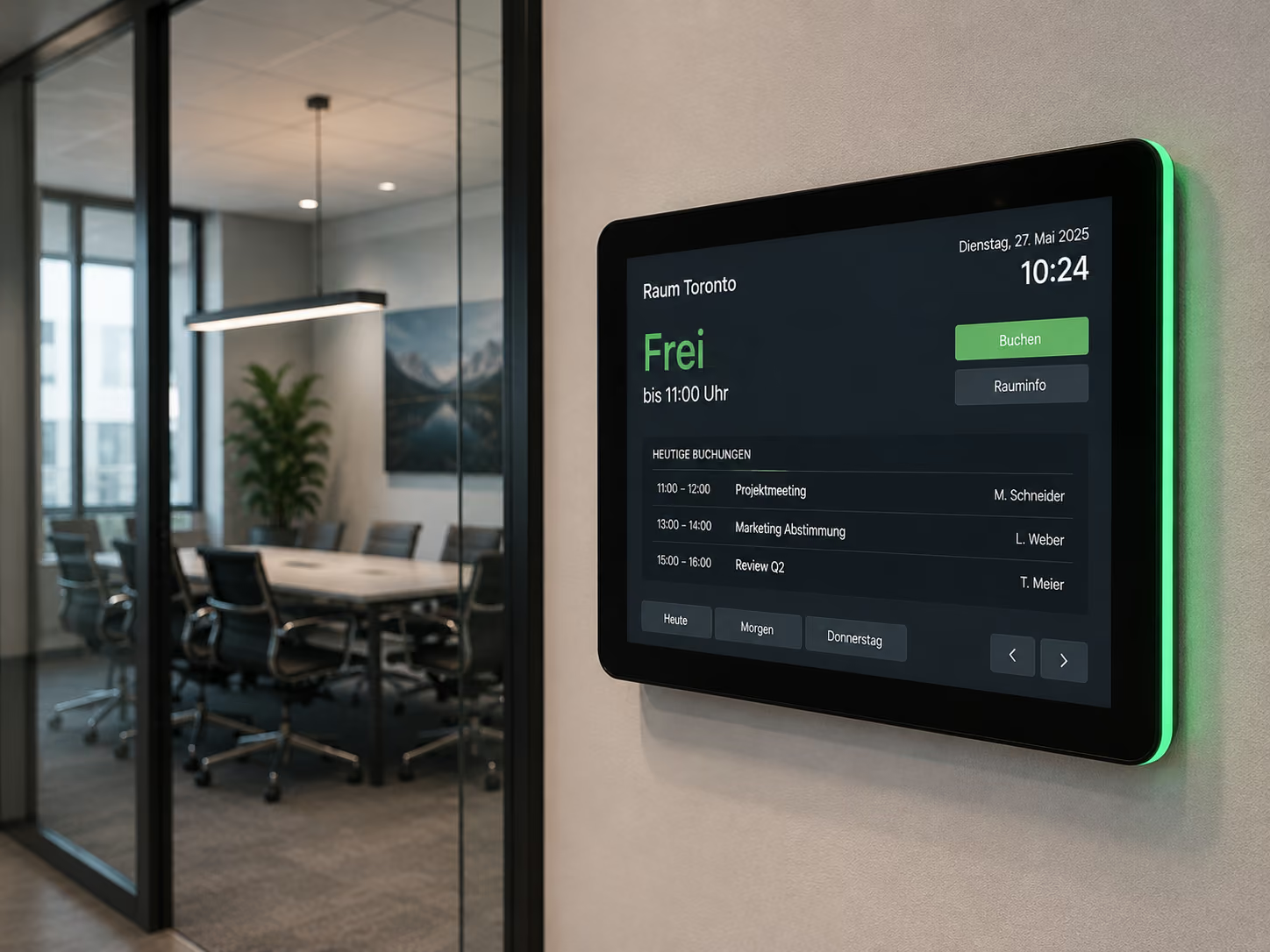
- Organization: Room booking displays show occupancy and upcoming appointments outside conference and meeting rooms.
- Engagement: Event, exhibitor, and sponsor content draws attention to offers, presentations, or activities.
This creates a cohesive information system instead of many disconnected, individual media.
Which events are suitable for digital event communication?
Digital event and trade fair communication is ideal wherever large numbers of people need to be informed simultaneously and guided through changing rooms or program items.
Typical areas of application include:
- Trade fairs and public exhibitions
- Congresses and conventions
- Conferences and business events
- In-house exhibitions and partner events
- Product presentations and roadshows
- Cultural and public events
- Sports events and arenas
- Festivals and hybrid events
- Corporate events
- Training sessions, workshops, and seminars
- Temporary exhibitions and pop-up formats
Permanent event venues also benefit when rooms and spaces are constantly reimagined for each event.
What are the benefits of digital event and trade fair communication?
Digital event communication primarily improves timeliness, navigation, and flexibility.
- Visitors receive information exactly where it is relevant.
- Schedules and changes can be updated at short notice.
- Digital wayfinding makes navigating large venues easier.
- Welcome screens create a professional first impression.
- Room occupancy and upcoming schedules become transparent.
- Exhibitors, partners, and sponsors can be highlighted effectively.
- Content can be swapped to suit the specific event.
- Multiple displays are managed via a central platform.
- Corporate design and brand identity remain consistent.
- Printed updates and manual replacement processes are reduced.
The decisive advantage lies not just in the screen itself, but in the central management of the entire communication surface.
Welcome screens: Greeting visitors professionally
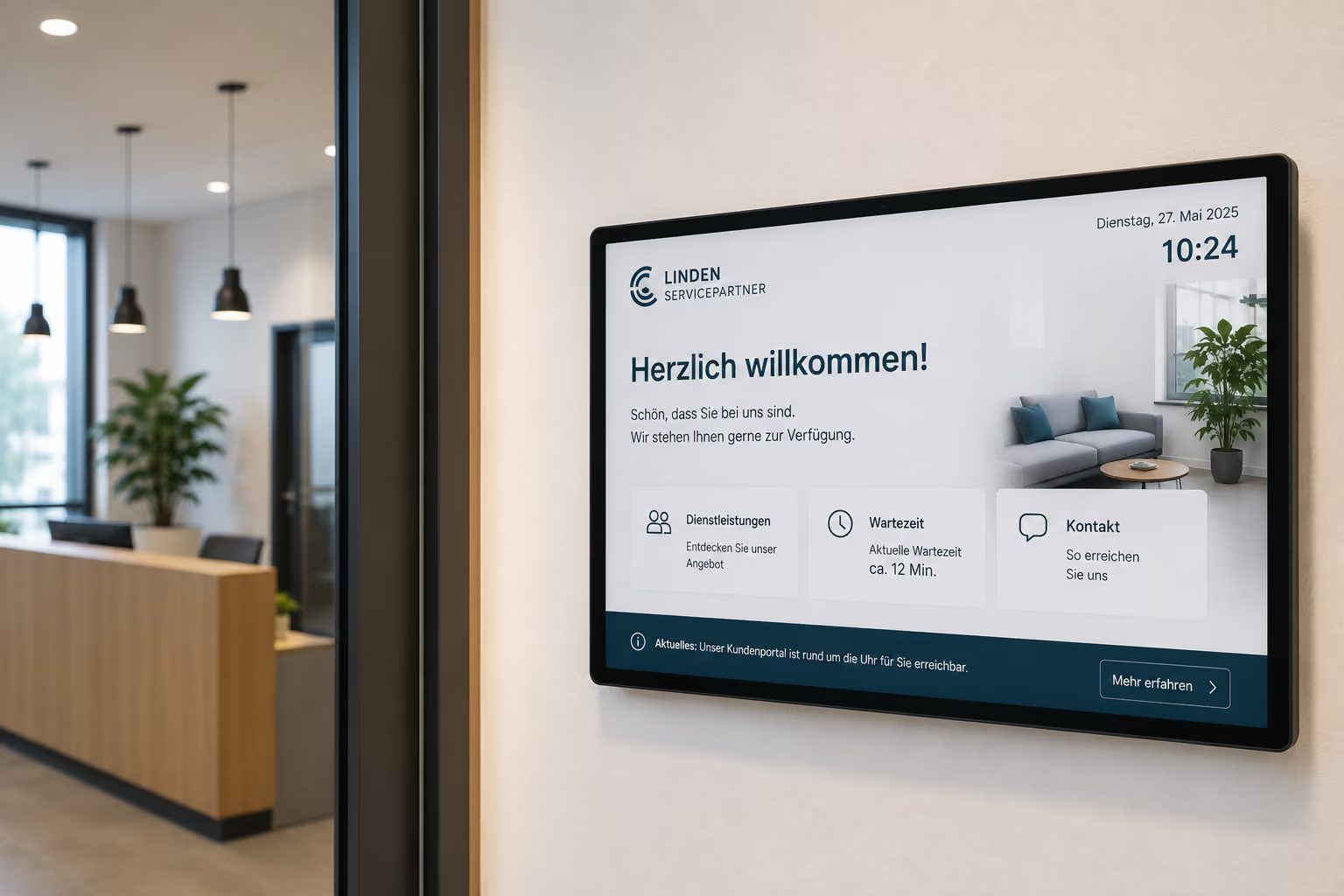
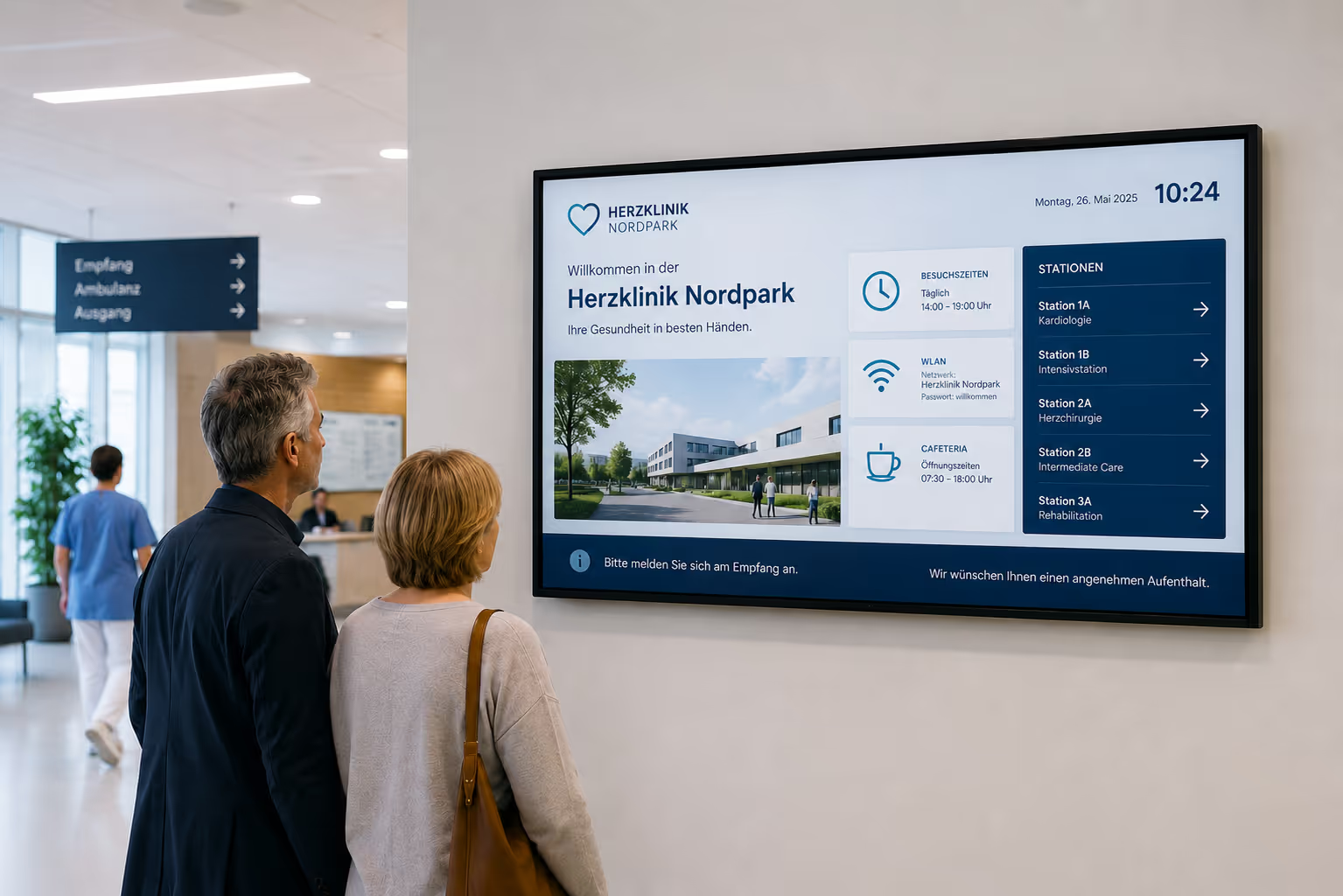
The entrance area is the first digital touchpoint of an event. Welcome screens confirm to visitors that they have arrived at the right place and consolidate the most important information for getting started.
Typical content includes:
- Event name and logo
- Date and opening hours
- Daily schedule and highlights
- Hall or room maps
- Registration instructions
- Safety and service information
- Sponsors and partners
- QR codes for the event app or digital program
If multiple events are taking place at the same location, the displays can be automatically switched to the respective format.
Digital wayfinding: Guiding people safely through halls and event spaces
Digital wayfinding helps visitors find their destinations faster. Depending on the location, it displays halls, stages, conference rooms, exhibition booths, cloakrooms, catering, restrooms, or exits.
The digital version is particularly helpful when:
- multiple events are taking place in parallel
- entrances or routes change depending on the event
- rooms are changed at short notice
- different target groups require different information
- temporary closures or diversions need to be clearly indicated
- visitor flows need to be distributed across different areas
Digital wayfinding complements fixed building signage with up-to-date, event-specific information.
Display programs, agendas, and live updates in real time
Event schedules change more often than a printed plan can reflect. Presentation titles, times, rooms, or speakers may need adjustment. Digital program overviews make these changes visible at central locations.
Possible content includes:
- current and upcoming program items
- start and end times of presentations
- room and stage assignments
- speakers and topics
- breaks and networking sessions
- program changes and cancellations
- countdowns to the next program item
- information on additional sessions or activities
This ensures visitors see not only the entire program, but exactly the information relevant to their current location.
Room booking displays for conferences and meetings
Digital communication surfaces can be used for brand presence in addition to orientation and programming. Sponsor content should be clearly planned and distributed across appropriate locations.
Typical options include:
- logo and partner placements on welcome screens
- sponsor visuals between program content
- promotions for exhibition booths or activities
- exhibitor highlights and new products
- Videos and brand messaging on large displays
- customized content in lounges or conference areas
Schedules and content groups allow for the meaningful integration of editorial information and brand content.
Case study: Visitor communication at Messe Essen
Messe Essen demonstrates what networked event and trade fair communication looks like in practice. Large visitor flows, changing events, and diverse target groups require clear guidance, up-to-date information, and a consistent brand presence.
A cross-site digital signage concept was implemented using connectSignage:
- Welcome screens in entrance areas greet visitors.
- Events, programs, and directions are clearly communicated.
- Digital wayfinding supports navigation across the exhibition grounds.
- Room booking displays show occupancy status outside conference and meeting rooms.
- Displays integrated into wall elements present trade fair content, branding, and sponsor information.
- All content can be managed centrally and adjusted flexibly.
The result is clearer visitor communication that flexibly supports various events and formats. Welcome screens and digital wayfinding improve navigation, while central management ensures consistent communication throughout the venue.
View case study: Messe Essen – efficient visitor communication with welcome screens, digital wayfinding, and room booking
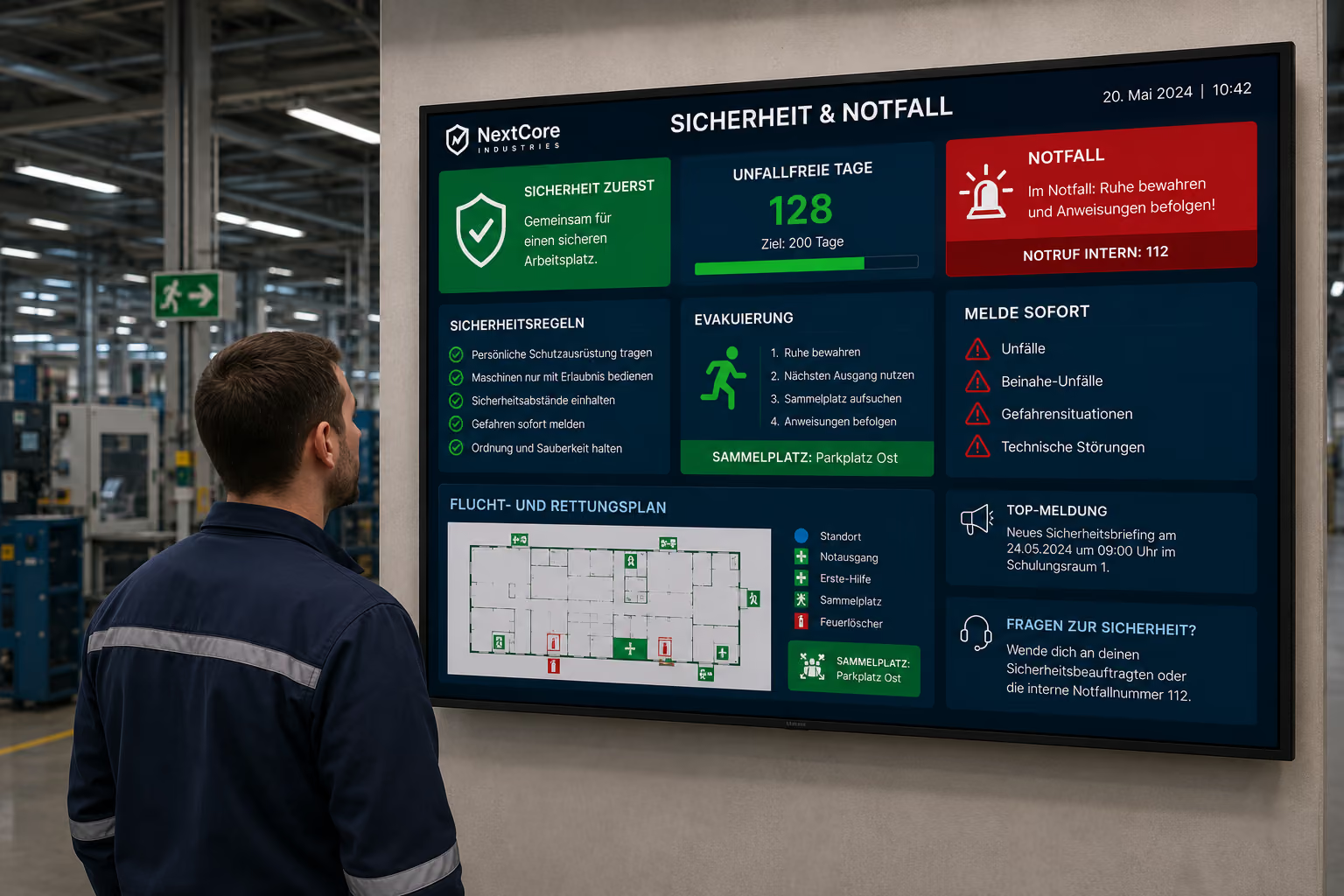
Emergency and safety information during events
During events, important notices must be visible quickly and clearly. Digital displays can supplement regular event communication with prioritized information when needed.
Potential content includes:
- Notices regarding restricted areas
- changed entrances and exits
- evacuation and escape route information
- safety instructions
- assembly points
- all-clear signals and current status updates
Important: Digital displays do not replace mandatory alarm or safety systems. However, they can supplement existing safety concepts with highly visible information.
Technical requirements for event organizers
For reliable event communication, software, displays, players, network, and editorial workflows must work together seamlessly.
Key requirements include:
- centralized control of all displays and locations
- easy content management via browser
- scheduling by event, day, and time
- grouping by hall, entrance, room, or display type
- flexible layouts in corporate design
- support for images, videos, websites, and dynamic content
- roles and permissions for organizers, agencies, or teams
- monitoring for displays and players
- reliable playback during event operations
- option to prioritize the display of important notices
- cloud or on-premise operation to suit your infrastructure
In addition, responsibilities should be clearly defined: who provides content, who reviews it, and who is authorized to publish last-minute changes?
Why connectSignage is ideal for event and trade fair communication
connectSignage is digital signage software for the centralized creation, scheduling, and distribution of digital content. The platform is particularly well-suited for event and trade fair communication when you need to manage many displays, changing events, and diverse communication tasks from a single interface.
The key benefits include:
- centralized control of welcome screens, wayfinding, and information displays
- flexible scheduling for changing events
- location- and room-specific content distribution
- browser-based content management
- layouts in the event's corporate design
- integration of schedules, websites, and dynamic information
- combination with digital room booking
- roles and permissions for different teams
- monitoring for reliable operation
- flexible hardware support
- cloud or on-premise operation
- GDPR-compliant usage and hosting in Germany
This allows individual displays to be connected into a cohesive information system for visitors, organizers, exhibitors, and partners.
Conclusion: Digital communication makes events more current, modern, and organized
Digital event and trade fair communication makes schedules, directions, room occupancy, and current updates visible exactly where visitors need them.
Welcome screens create a professional first impression, digital wayfinding improves navigation, and information displays keep schedules and updates current. At the same time, exhibitors, partners, and sponsors can be flexibly integrated into your communications.
With connectSignage, organizers can centrally plan this content, deploy it based on location, and reuse it for various event formats. This turns individual screens into a consistent and adaptable visitor communication system.
FAQ
What is digital event and trade fair communication?
Digital event and trade fair communication refers to the use of centrally managed displays to welcome, inform, and guide visitors at events. Examples of content include schedules, wayfinding, room occupancy, and real-time updates.
What content can be shown on event displays?
Suitable content includes welcome messages, programs, agendas, wayfinding, room status, exhibitor information, sponsor content, QR codes, service notices, and last-minute updates.
How does digital signage help with visitor guidance?
Digital signage displays halls, rooms, stages, booths, and service points. Changes or temporary detours can be updated centrally.
Can program changes be displayed on short notice?
Yes. Times, rooms, speakers, or cancellations can be adjusted centrally and published to the relevant displays.
Is digital signage suitable for changing events?
Yes. Content can be scheduled by event, location, and time period, and automatically switched or reset once the event concludes.
Can sponsors and exhibitors be included?
Yes. Sponsors, partners, and exhibitors can be integrated into event communication via defined zones, playlists, and schedules.
What do room booking displays show at a trade fair?
Room booking displays outside conference or meeting rooms show the current room status, appointments, times, and upcoming bookings.
Can digital signage display safety information?
Yes. Displays can show priority notices such as changed exits, restricted areas, or evacuation information. This does not replace mandatory alarm systems.
Is the solution also suitable for hybrid events?
Yes. Displays can use QR codes, streaming information, digital agendas, and other details to connect on-site attendees with digital offerings.
How does connectSignage support events and trade fairs?
connectSignage enables the centralized planning and deployment of welcome screens, digital wayfinding, program information, room booking displays, and event content from a single platform.
Bereit deine Kommunikation zu transformieren?
Entdecken, wie connectSignage deine Botschaften sichtbar und wirksam macht.
Weitere Insights zur digitalen Kommunikation
Lese mehr zu Trends, Strategien und Technologien, die Unternehmen verändern.
.png)

.png)
.png)
Digital Signage Insights Delivered Straight to Your Inbox
Trends, best practices, and tips—concise, relevant, and practical.