
.png)
Digital sidewalk sign: Reaching foot traffic right outside your store
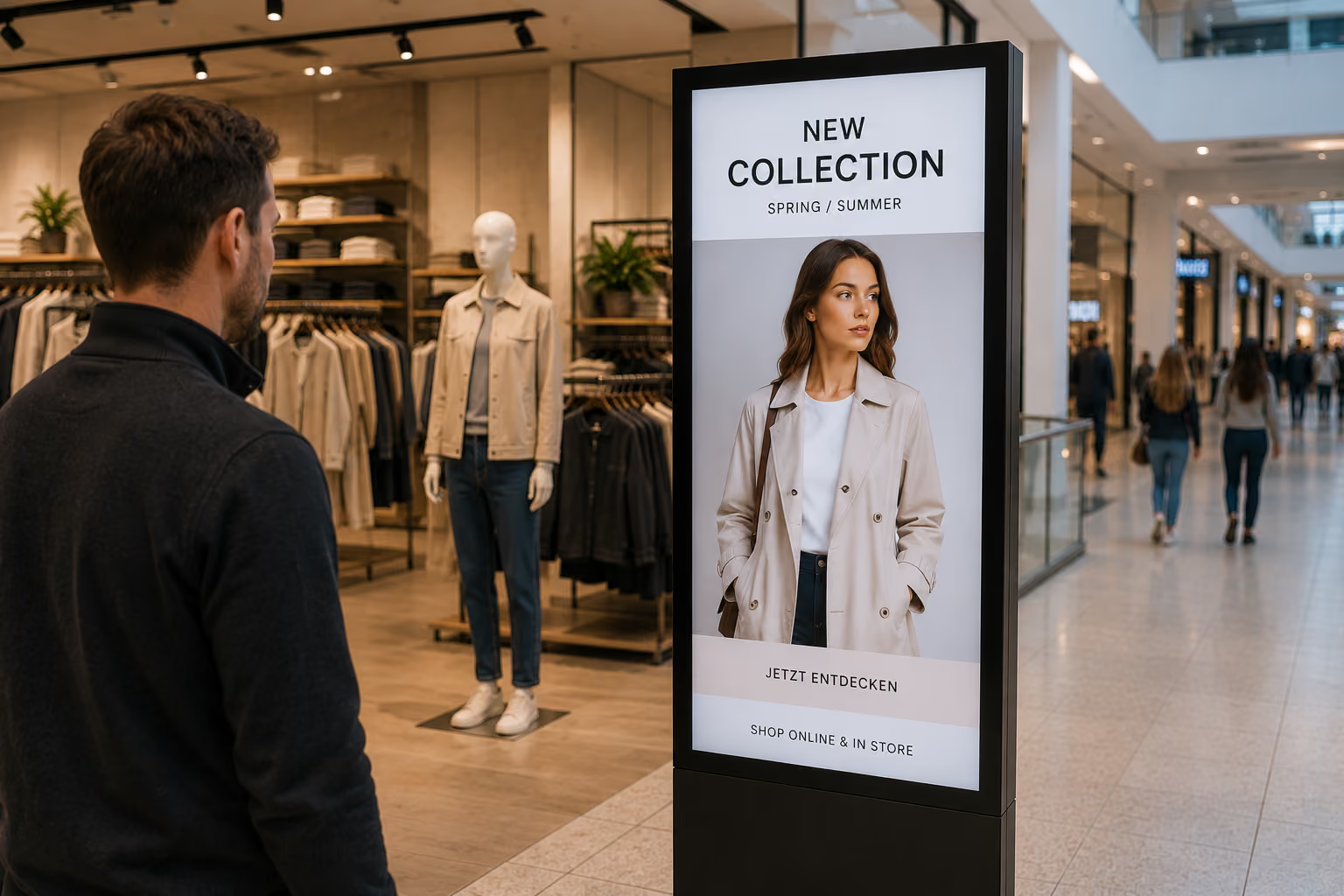
In front of stores, branches, and retail spaces, the decision to walk past or step inside is often made in just a few seconds. Offers, new arrivals, and brand messages must therefore not only look good—they must be visible at the right moment.
Traditional sidewalk signs have served this purpose for many years. Printed posters or chalkboards placed in entrance areas, on sidewalks, or in corridors are designed to grab attention. However, as soon as content needs to change frequently, multiple locations are involved, or dynamic media is required, these static solutions reach their limits.
This is exactly where the digital sidewalk sign comes in.
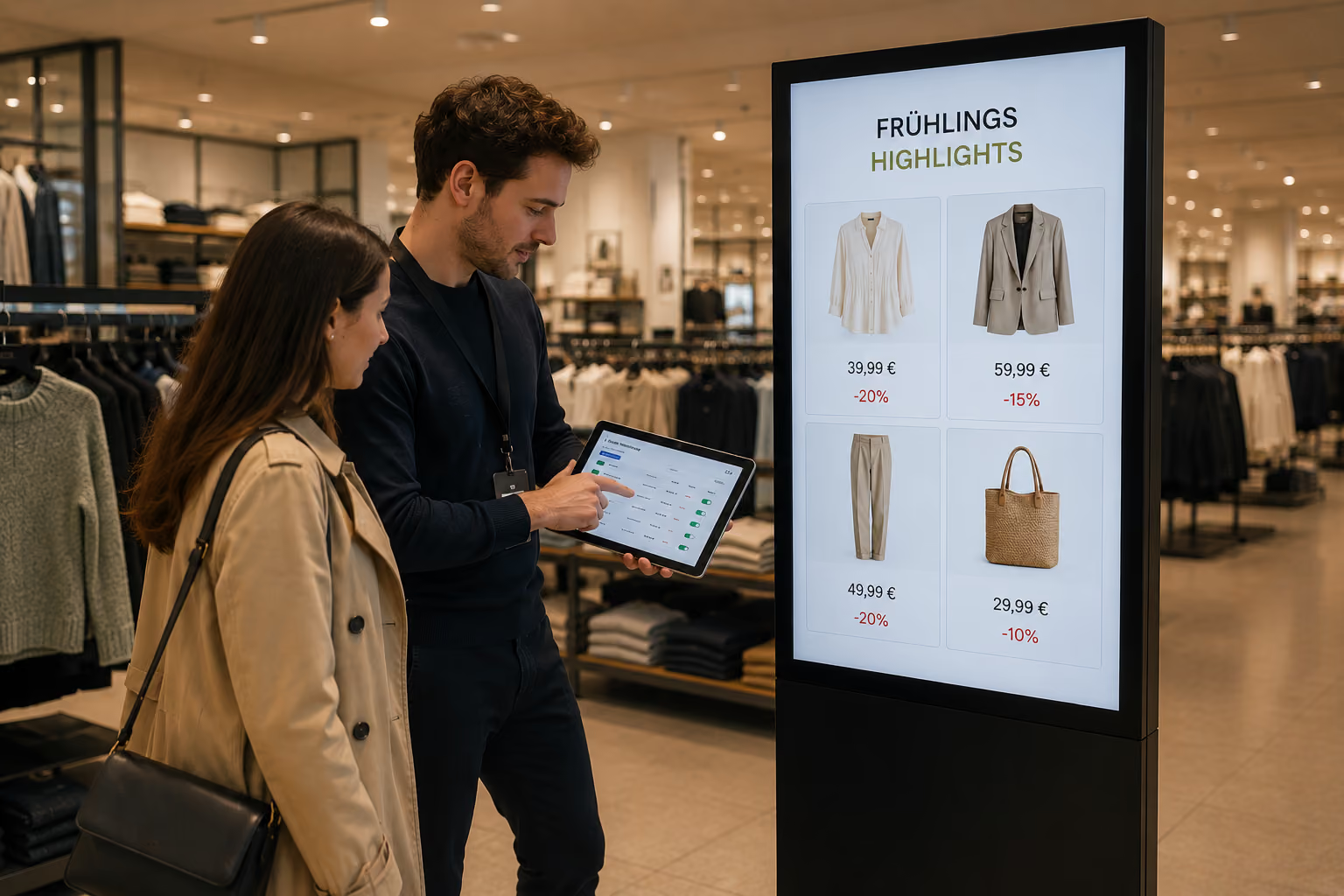
In a nutshell: A digital sidewalk sign is a freestanding or mobile digital signage display that engages passersby in front of a store, in a corridor, or on the sales floor. It displays current offers, products, videos, promotions, or information and can be updated centrally and on a schedule.
A digital sidewalk sign thus combines the high-visibility placement of a traditional advertising stand with the flexibility of digital content.
Why traditional sidewalk signs reach their limits
Printed stands are easy to use, but changing campaigns creates ongoing effort. New designs must be created, produced, distributed, and swapped out on-site. With multiple branches, it also becomes difficult to ensure the right content is displayed everywhere at the right time.
Typical challenges include:
- Offers and prices become outdated quickly.
- New designs require printing and manual replacement.
- Dynamic content and videos are not possible.
- Time of day, weather, or location cannot be taken into account flexibly.
- Branches do not always display campaigns simultaneously.
- Local promotions can only be added with additional effort.
- It is difficult to verify whether the correct design is being used on-site.
- Multiple messages require multiple stands or frequent design changes.
A digital sidewalk sign reduces this effort. Content is scheduled via a central platform and deployed to the desired display. This allows companies to react more quickly to new campaigns, product availability, time of day, or local events.
Why digital sidewalk signs are relevant at the point of sale
A digital sidewalk sign engages people before they enter the store or while they are navigating between different offers. It is often positioned at a transition point: between the walkway and the sales floor, between the shop window and the entrance, or between different areas of a shopping center.
In this position, it fulfills three tasks:
- Generating attention: Moving images, changing content, and highly visible offers stand out from static environments.
- Conveying relevance: Passersby quickly recognize which offer, product, or experience awaits them in the store.
- Encouraging action: A clear message can prompt people to enter, get information, scan a QR code, or take advantage of a promotion.
This turns the digital sidewalk sign into a visible touchpoint along the customer journey. It connects external impact, sales promotion, and up-to-date customer information.
Who is a digital sidewalk sign suitable for?
Digital sidewalk signs are suitable for companies and institutions that want to engage people in high-traffic areas or display content that changes on short notice.
They are particularly useful for:
- Retail and chain stores
- Fashion, footwear, and sports stores
- Supermarkets and grocery stores
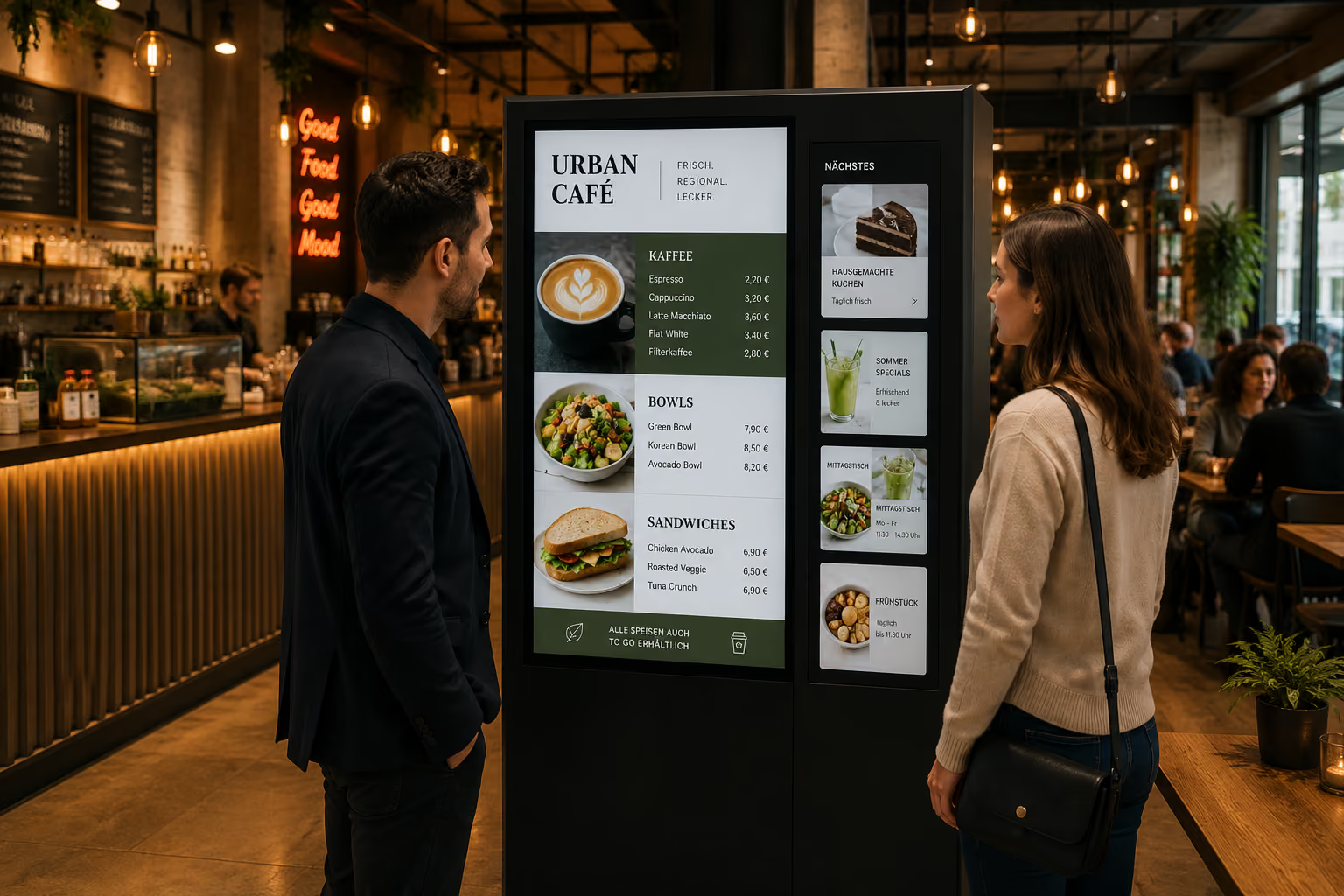
- Bakeries, cafés, and restaurants
- Pharmacies and drugstores
- Electronics and furniture retailers
- Shopping centers and arcades
- Hotels and leisure facilities
- Trade fairs, events, and pop-up stores
- Car dealerships and showrooms
- Banks, insurance companies, and service centers
The greatest benefit is realized where many people pass by the display and current content can influence their decisions or provide guidance.
What are the benefits of a digital sidewalk sign?
A digital sidewalk sign primarily improves the timeliness, visibility, and manageability of your communication.
The key advantages are:
- Offers and campaigns become visible even before customers enter.
- Videos, animations, and changing visuals increase visual engagement.
- Content can be updated without the need to change posters.
- Promotions can be scheduled by time of day, day of the week, or season.
- Branches receive centrally approved content.
- Location-specific offers remain possible nonetheless.
- QR codes link the display message to further information.
- Printing, shipping, and replacement processes are reduced.
- Brand presence and corporate design remain consistent across all locations.
- Even last-minute notices can be made visible quickly.
This transforms the sidewalk sign from a static advertising space into a flexibly manageable communication channel.
Digital sidewalk sign or advertising display: What is the difference?
A digital sidewalk sign is a specific type of advertising display. The main difference lies in its design, placement, and purpose.
Placement
A digital sidewalk sign is usually placed freely in front of a store, right at the entrance or in a high-traffic walkway. An advertising display, on the other hand, can be used flexibly in shop windows, on the sales floor, or in shelf, checkout, or promotional areas.
Primary function
The sidewalk sign is intended to grab the attention of passersby, spark interest, and encourage them to enter. An advertising display communicates products, promotions, or brand messages at various touchpoints.
Usage scenario
The sidewalk sign is most effective at the transition between public walkways and the sales area. Advertising displays accompany customers at additional touchpoints both inside and outside the store.
This distinction is important: not every advertising display is a sidewalk sign. A digital sidewalk sign is specifically designed to capture attention in walkways and engage people at the entrance.
What content is suitable for digital sidewalk signs?
Content should be easy to understand at a glance. People often only see a sidewalk sign for a few seconds. Therefore, you need a clear message, a strong visual, and a distinct call to action.
Typical content includes:
- current offers and discount promotions
- daily deals or limited-time specials
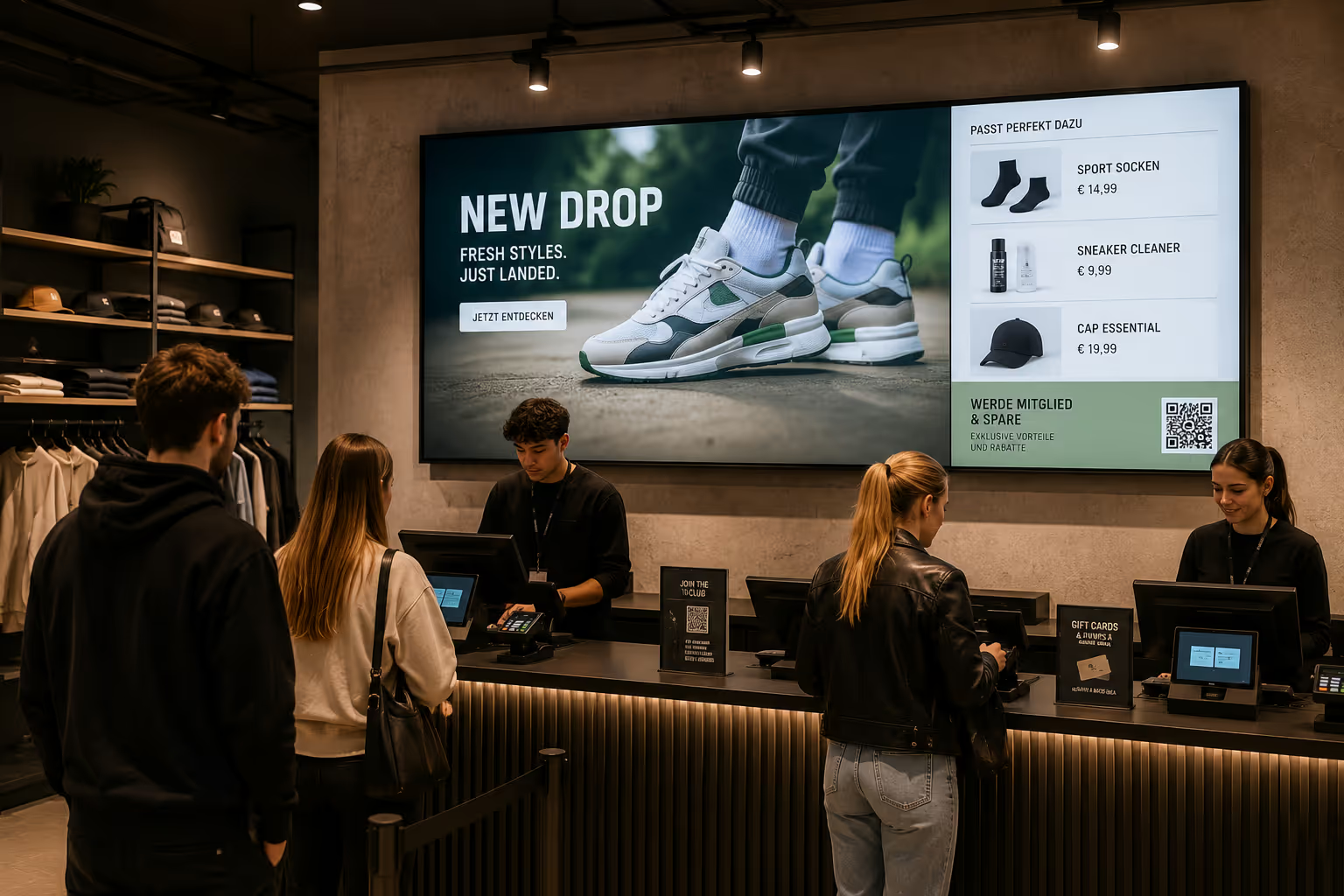
- new products and new collections
- seasonal campaigns
- grand openings and events
- information about services or consultations
- menus, daily specials, or happy hour offers
- product videos and short animations
- QR codes for coupons, reservations, or product information
- opening hours and short-notice announcements
- brand messaging and image-building content
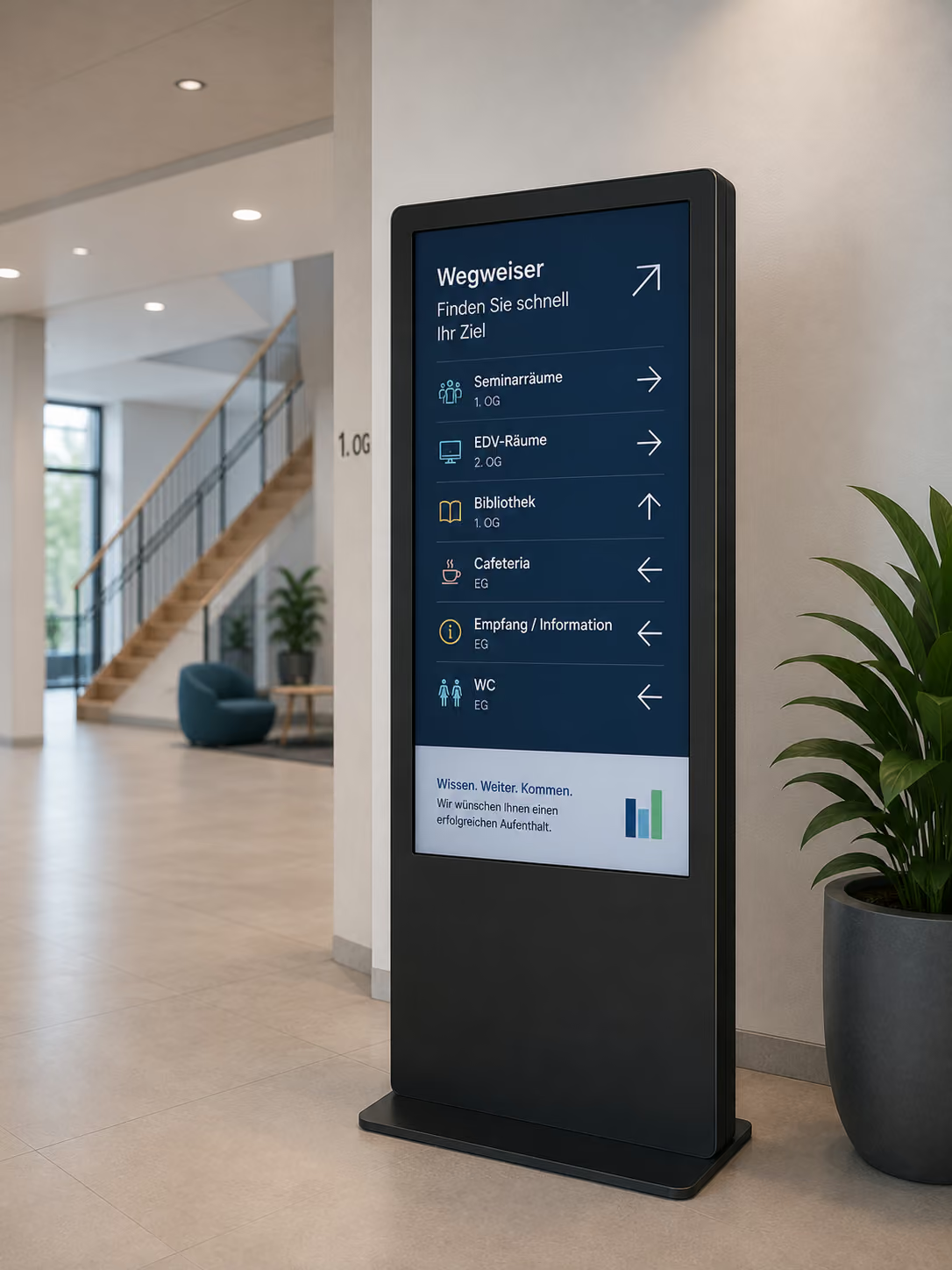
- Wayfinding for promotional areas or pickup zones
When designing, keep in mind: one main message per scene is usually more effective than a cluttered display. Text should be legible from a typical viewing distance, motion should be used purposefully, and the primary benefit must be immediately clear.
Schedule content by time of day, day of the week, and location
Digital sidewalk signs are most effective when content isn't static. With scheduled playback, businesses can tailor their messaging to the actual context of use.
Examples:
- display breakfast offers in the morning, lunch specials at midday, and events in the evening
- run weekend promotions only on the relevant days
- automatically start and end seasonal campaigns
- promote regional products only at selected locations
- add local events or updated opening hours on short notice
- plan different content for city center, shopping mall, and train station branches
This ensures passersby don't just see any campaign, but a message that fits the time and place.
Centrally manage digital sidewalk signs across branch networks
With multiple locations, it’s not enough to simply provide content digitally. The key is ensuring the right campaign appears reliably on the right display.
Centralized digital signage software enables:
- global campaigns for all branches
- regional or location-specific content
- grouping by branch type, product range, or target audience
- scheduled publishing and automatic campaign expiration
- roles and permissions for central and local teams
- Monitoring of displays and players
- rapid replacement of outdated media
This allows a company to combine consistent brand management with local relevance. Headquarters can provide mandatory content, while selected branches are given defined areas for local messaging.
Freestanding, mobile, or for outdoor use?
The right design depends on the location. Freestanding displays are frequently used in shopping centers or indoor spaces. Mobile models can be positioned in different spots depending on the time of day or the campaign.
Additional requirements are important for outdoor use:
- sufficient brightness in daylight
- protection against moisture, dust, and temperature fluctuations
- stable construction suitable for the location
- anti-reflective or highly legible surface
- secure power and network supply
- compliance with local regulations for signage in public spaces
Hardware and housing must therefore always be selected to suit the location. A display for a covered walkway has different requirements than a sidewalk sign that remains outdoors permanently.
What companies need technically
For reliable operation, a digital sidewalk sign requires more than just a display. Software, players, network, and housing must work together seamlessly.
Key requirements include:
- central, browser-based content management
- scheduling for campaigns and visuals
- location and group logic for branch networks
- support for images, videos, animations, and websites
- appropriate display brightness and orientation
- reliable digital signage player or suitable system-on-chip solution
- monitoring for display and player
- roles and permissions for marketing and local teams
- stable playback even with temporarily limited connectivity
- data-compliant design for interactive or data-driven applications
The earlier location, viewing angle, power supply, network, and desired content are planned together, the more reliably the digital sidewalk sign will function in everyday use.
Why connectSignage is suitable for digital sidewalk signs
connectSignage is digital signage software for the centralized creation, scheduling, and distribution of digital content. The platform is particularly well-suited for digital sidewalk signs when campaigns need to be managed flexibly, on a schedule, and across multiple locations.
The key benefits are:
- centralized control of one or more digital sidewalk signs
- browser-based content management without the need for specialized design software
- scheduling by time, day, or campaign period
- location-based distribution for retail chains
- flexible layouts in your corporate design
- support for images, videos, websites, and dynamic content
- roles and permissions for central and local teams
- monitoring for reliable operation
- flexible hardware support
- cloud or on-premise operation
- GDPR-compliant usage and hosting in Germany
This is how digital sidewalk signs can be operated as an integral part of POS communication – from a single store to a multi-location retail chain.
Conclusion: Digital sidewalk signs turn your entrance into an active communication space
A digital sidewalk sign brings current offers, products, and brand messages directly into the path of potential customers. It combines the high-visibility positioning of a classic A-frame sign with the possibilities of digital, motion-based, and time-scheduled content.
It is particularly useful when campaigns change frequently, multiple locations are managed centrally, or different messages need to be displayed depending on the time of day and the specific branch.
With connectSignage, companies can centrally manage digital sidewalk signs, design content in their corporate identity, schedule campaigns, and deploy them based on location. This turns a static advertising space into a flexible touchpoint at the point of sale.
FAQ
What is a digital sidewalk sign?
A digital sidewalk sign is a freestanding or mobile display that engages passersby in front of a store, at the entrance, or in high-traffic walkways with offers, products, and information.
What is a digital sidewalk sign used for?
It is used to generate attention, attract walk-in customers, highlight current promotions, and encourage people to enter a store or take advantage of an offer.
What is the difference between a digital sidewalk sign and an advertising display?
A digital sidewalk sign is a specific type of advertising display. It is usually placed freely in a walkway or at an entrance with the goal of stopping passersby. Advertising displays, on the other hand, can be used in many other positions both inside and outside a store.
What content can a digital sidewalk sign display?
It is suitable for offers, new products, videos, animations, daily specials, opening hours, events, QR codes, services, and brand messages.
Can content be scheduled?
Yes. Content can be scheduled and automatically updated based on time of day, day of the week, season, or campaign period.
Is a digital sidewalk sign suitable for multiple branches?
Yes. Using centralized digital signage software, you can manage campaigns for all branches as well as regional or location-specific content.
Can a digital sidewalk sign be used outdoors?
Yes, provided the display, housing, and construction are suitable for outdoor use. Key factors include weather protection, brightness, stability, and a secure power supply.
Can a digital sidewalk sign be interactive?
Yes. Touch functions can, for example, provide product information, digital guidance, navigation, or offer selection. However, for many attention-grabbing applications, non-interactive content is sufficient.
What are the advantages of a digital sidewalk sign over a traditional poster stand?
Content can be updated without the need for reprinting, scheduled based on time and location, and enhanced with videos or animations. This reduces manual replacement processes and increases flexibility.
How does connectSignage support digital sidewalk signs?
connectSignage helps companies centrally create, schedule, and deploy content to digital sidewalk signs. Branch groups, scheduling, roles, monitoring, and various media formats can all be managed from a single platform.
Bereit deine Kommunikation zu transformieren?
Entdecken, wie connectSignage deine Botschaften sichtbar und wirksam macht.
Weitere Insights zur digitalen Kommunikation
Lese mehr zu Trends, Strategien und Technologien, die Unternehmen verändern.
.png)

.png)
.png)
Digital Signage Insights Delivered Straight to Your Inbox
Trends, best practices, and tips—concise, relevant, and practical.