
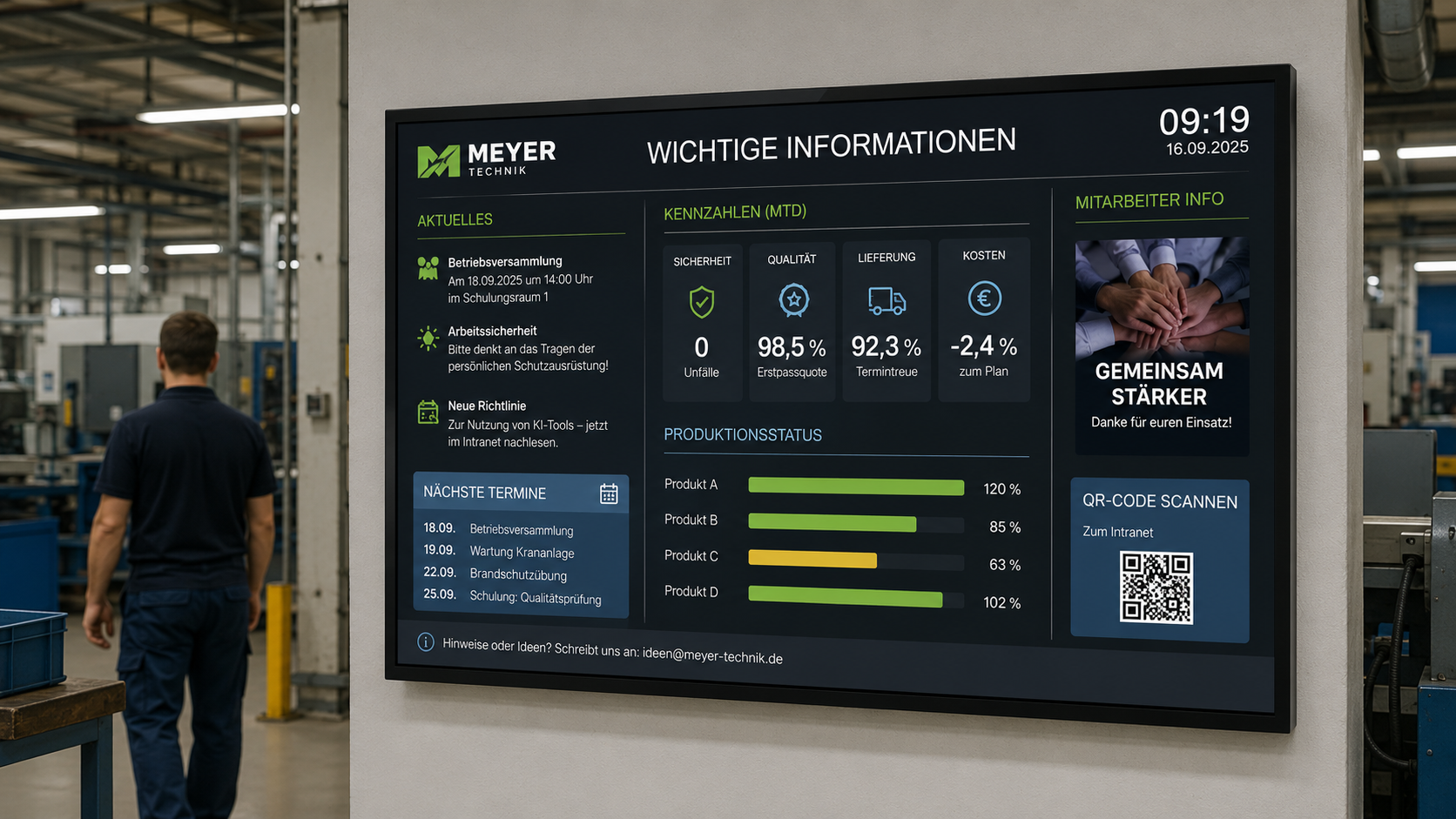
Production data, shift schedules, and safety directly on the shop floor
In industrial companies, information must be quick, clear, and visible where work happens. Production key figures, shift schedules, safety information, order data, machine status, and internal announcements must not get lost in emails, bulletin boards, or informal communication.
This is precisely where digital signage comes into play in industry.
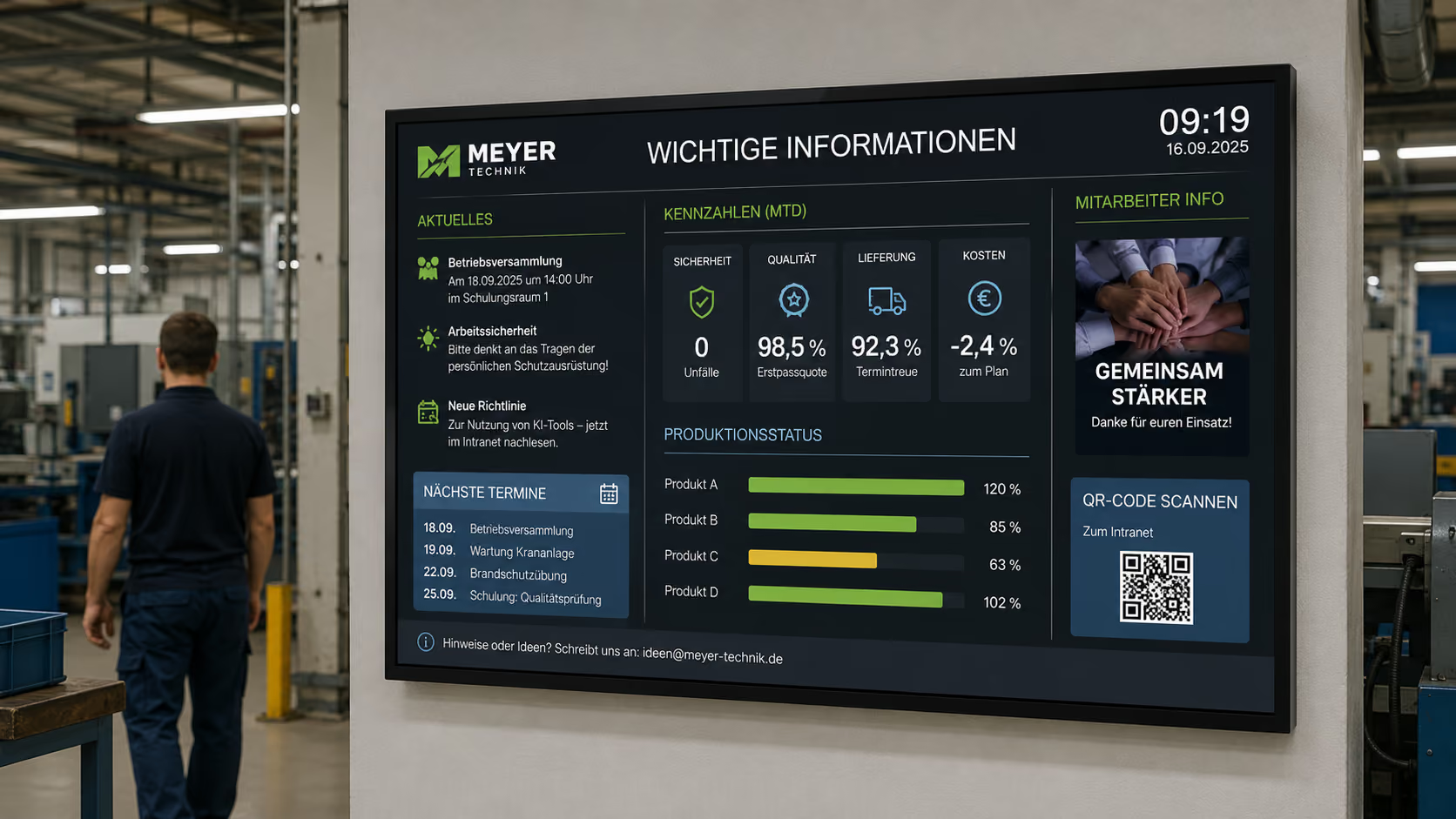
Briefly explained: Digital signage in industry refers to the use of digital displays to make production key figures, shift schedules, safety information, order data, and internal communications directly visible on the shop floor. With connectSignage, content for plants, halls, production lines, break areas, and control rooms can be centrally managed and displayed according to location, shift, or production area.
Digital displays don't just replace traditional bulletin boards. They bring information from offices, ERP, MES, Power BI, or internal communication directly into production. This makes data, notices, and goals visible precisely where employees make decisions, operate machines, and control processes.
Why industrial communication needs new channels
Much information originates in systems, meetings, or offices. However, it often arrives on the shop floor too late, incomplete, or not at all.
This is particularly problematic in shift operations. If information is only passed on via email, bulletin boards, or verbal handover, gaps quickly emerge. A shift schedule is no longer current. Safety information is only posted in one location. A key figure might be available in the dashboard but not visible to the team on the line.
Typical challenges in industrial companies include:
- Information reaches employees on the shop floor too late.
- Shift schedules and internal notices quickly become outdated.
- Production key figures are only visible in systems.
- Safety information must arrive immediately in an emergency.
- Visitors, suppliers, and new employees find it difficult to navigate large plant premises.
- Meeting rooms and training rooms are double-booked or managed inefficiently.
Digital signage creates a visible connection between offices, production, and shift operations. Content can be centrally maintained and specifically displayed in individual plants, halls, lines, or areas.
Who can benefit from digital signage in industry?
Digital signage is suitable for production companies, manufacturing businesses, mechanical engineering, automotive, food production, electronics production, logistics centers, industrial parks, chemical companies, and plants with shift operations.
Digital signage is particularly relevant wherever information from office, production, ERP, MES, or BI systems needs to be directly visible on the shop floor.
Companies with multiple locations also benefit, as internal communications, safety alerts, and key performance indicators can be centrally managed and displayed site-specifically.
What are the benefits of digital signage in industry?
Digital signage improves shop floor communication, production control, safety, and internal communication. Digital displays show OEE, scrap rates, production targets, machine status, shift schedules, safety alerts, and order data.
The most important industrial use cases are:
- digital bulletin board
- Shop floor information displays
- Production displays
- Emergency and safety communication
- digital wayfinding
- Meeting room displays
Each of these applications serves a different purpose within the plant. Together, they ensure that information is more current, visible, and closer to the work process.
Digital Bulletin Board: Internal Communication on the Shop Floor
A digital bulletin board centrally displays shift schedules, KPIs, safety instructions, HR information, and current announcements on screens.
It replaces paper notes, physical notices, and informal communication channels. What's on the digital bulletin board is current, visible, and accessible to all relevant teams.
This is especially crucial in shift operations. Employees work different hours, teams don't always meet in person, and information still needs to be reliably conveyed.
Typical content for a digital bulletin board in industrial settings includes:
- Shift schedules
- Safety instructions
- Internal announcements
- HR Information
- Production Targets
- Quality Metrics
- Visitor Information
- Plant Announcements
Digital notice boards are ideal for production floors, break rooms, plant entrances, employee areas, and shift handover zones.
Shop Floor Info Displays: Making metrics visible directly on the shop floor
Info displays on the shop floor show production metrics, quality data, OEE, scrap rates, and current operational information.
Those who know their numbers can work more effectively. That's why shop floor displays are particularly valuable for teams that work daily with production targets, quality, and process deviations.
Digital info displays can make metrics visible without employees having to switch systems or go to an office. Data that would otherwise only be found in dashboards or reports becomes available directly on the shop floor.
This supports Lean Management, Shop Floor Management, and continuous improvement.
With connectSignage, dashboards, metrics, or operational information can be centrally provided and displayed for specific areas — for example, for individual lines, halls, plants, or shifts.
Production Displays: Live Transparency Directly at the Production Line
Production displays show orders, cycle times, machine status, production targets, line performance, and deviations directly at the production line.
They help employees and managers react faster to disruptions or target deviations. If an order is delayed, a line deviates from its target, or a machine status requires attention, the information becomes immediately visible.
Production displays are particularly valuable in:
- Manufacturing
- Assembly
- Series Production
- Machine Building
- Automotive
- Food Production
- Electronics Manufacturing
- Logistics Areas
When ERP, MES, or BI data is connected, an up-to-date picture of production is created directly at the workstation. This fosters transparency between planning, manufacturing, and management.
Emergency and Safety Communication: Every Second Counts in the Factory
Safety is paramount in industry.
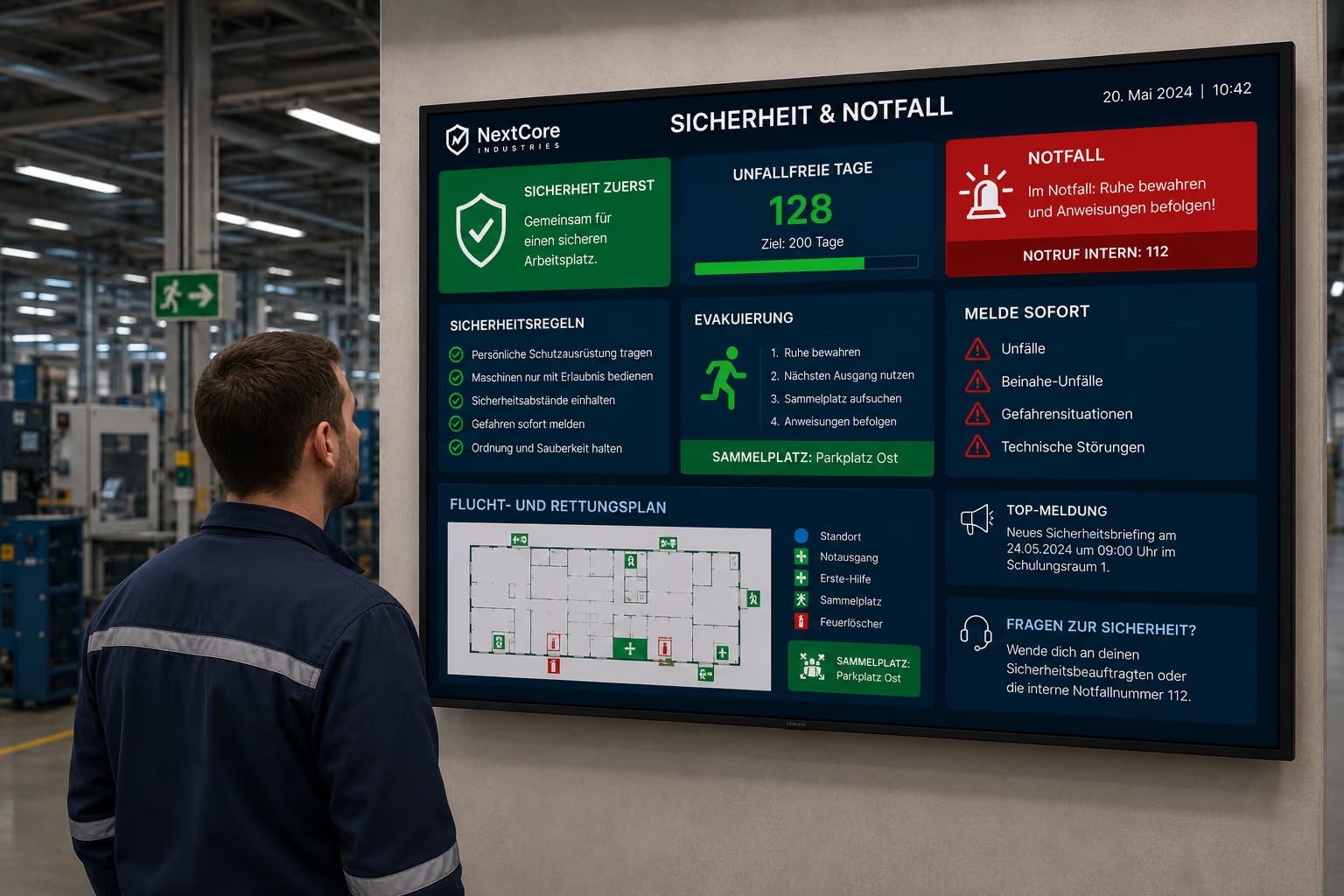
In the event of fire alarms, hazardous material alarms, evacuations, technical malfunctions, or other safety-critical incidents, employees, visitors, and suppliers must quickly know what to do.
Digital displays can centrally broadcast safety instructions, warnings, evacuation notices, and all-clears. This ensures information is not only communicated via loudspeakers or notices, but also made visually apparent.
This is particularly important in noisy production environments, large halls, or extensive factory premises.
Digital safety communication can help reach all relevant areas simultaneously and make clear instructions readily apparent.
Digital Wayfinding: Orientation on Large Factory Premises
Large factory premises are often challenging to navigate for visitors, suppliers, new employees, and auditors.
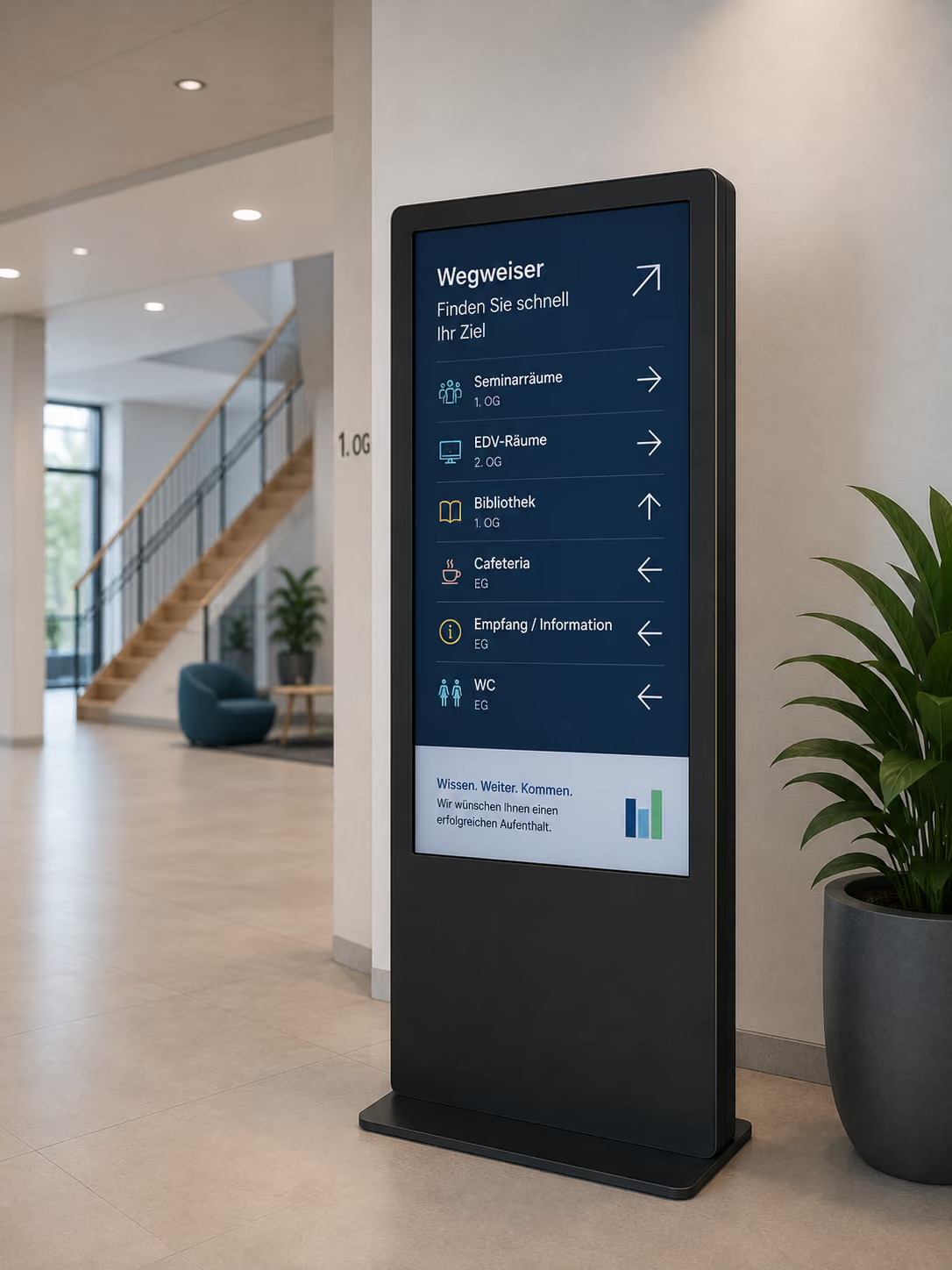
Digital wayfinding displays site maps, hall overviews, visitor routes, access roads, security areas, or assembly points. This makes it easier for external personnel to find their way and relieves the burden on reception or plant security.
Especially during audits, factory tours, or site visits, digital wayfinding appears professional. It demonstrates that processes, security, and visitor management are structured and organized.
In the event of renovations, relocations, or altered routes, digital maps can be centrally updated without the need to replace printed site plans or signs.
Meeting Room Displays: Simplify Room Management in the Factory
Even in industrial companies, meeting rooms, training rooms, project rooms, or conference areas must be managed efficiently.
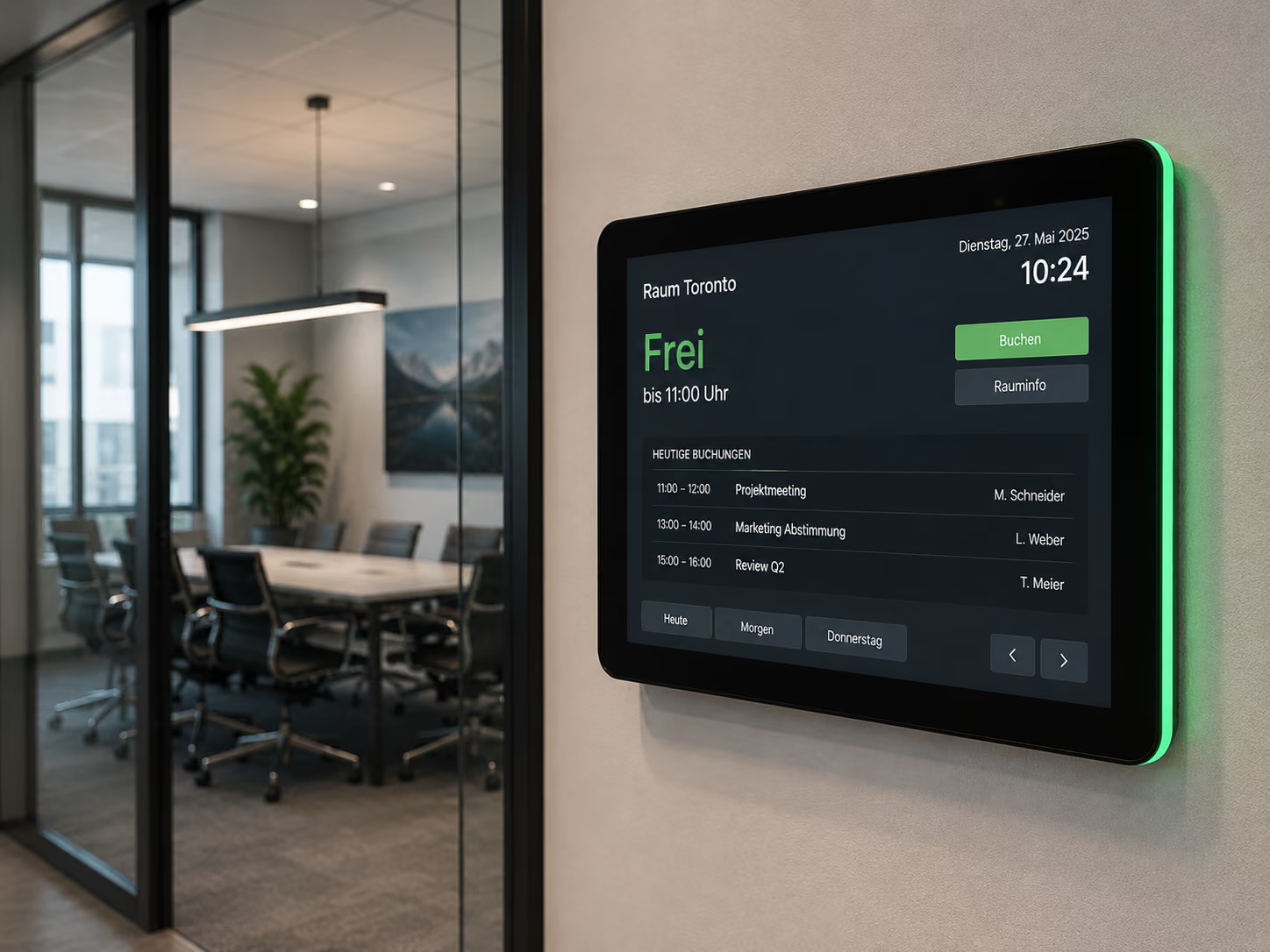
Meeting room displays show the current occupancy of a room in real-time. Rooms can be booked, extended, or released directly at the display.
This reduces double bookings, email coordination, and unnecessary inquiries. Especially at large sites with many teams, project groups, or training sessions, digital room management ensures greater transparency.
Meeting room displays are suitable for administrative areas, development sites, training centers, project rooms, and plant meeting areas.
Why connectSignage is ideal for industrial use
connectSignage is a digital signage software for central control of digital displays. Content can be managed, scheduled, and distributed to individual screens, plants, halls, lines, or areas via a single interface.
connectSignage is particularly suitable for industrial companies when production key figures, safety information, shift schedules, or internal announcements need to be displayed for specific locations and areas.
This allows digital bulletin boards, production displays, shop floor information displays, safety messages, wayfinding, and meeting room displays to be centrally managed and specifically distributed.
Conclusion: Digital Signage brings information directly to the workplace
Digital signage in industry makes visible information that is crucial for production, safety, and collaboration.
Whether digital bulletin boards, production displays, KPI dashboards, emergency communication, or wayfinding: Digital displays bring relevant content directly to the workplace.
For industrial companies, this results in greater transparency on the shop floor, better internal communication, faster responsiveness, and clearer safety communication.
With connectSignage, industrial companies can centrally control their plant communication and distribute it based on location, hall, line, or shift.
FAQ
What is Digital Signage in Industry?
Digital signage in industry describes the use of digital displays for communicating production key figures, safety information, shift schedules, order data, and internal announcements in plants, halls, and production areas.
What is a production display?
A production display shows manufacturing information such as orders, cycle times, machine status, line performance, production targets, or deviations directly at the production line.
How does Digital Signage help on the shop floor?
Digital signage makes key figures, quality data, OEE, shift information, and current notices visible directly in production. This provides employees with relevant information where they work.
Can Digital Signage be connected to ERP, MES, or Power BI?
Yes. Production data, order information, machine status, and KPI dashboards can be displayed on screens, making information from existing systems directly visible on the shop floor.
What is a digital bulletin board suitable for in industry?
A digital bulletin board is ideal for shift schedules, safety notices, internal announcements, HR information, KPIs, and plant messages. It makes internal communication visible to employees.
Can digital signage be used for safety communication at the plant?
Yes. In an emergency, digital displays can show warnings, evacuation instructions, safety instructions, or all-clear messages, and be centrally deployed to relevant areas.
How does connectSignage support industrial companies?
connectSignage helps industrial companies centrally control digital displays and deploy content specifically by plant, hall, line, shift, or use case.
Bereit deine Kommunikation zu transformieren?
Entdecken, wie connectSignage deine Botschaften sichtbar und wirksam macht.
Weitere Insights zur digitalen Kommunikation
Lese mehr zu Trends, Strategien und Technologien, die Unternehmen verändern.
.png)

.png)
.png)
.png)
Digital Signage Insights Delivered Straight to Your Inbox
Trends, best practices, and tips—concise, relevant, and practical.